Wild Flower Meadow
Coos Green (as in the past livestock were grazed there) is a 1.7 hectare wildflower meadow, which has had neither planting nor sowing. The management simply encourages what was there naturally, but had been inhibited by regular grass-cutting to provide public recreational open space. Zero pesticides and fertilizers maximises wildlife of all kinds.
Plants
Birds and Mammals
Invertebrates A section on insects including butterflies, moths and bumble bees is available via this link.
Butterflies, Moths & Bumble Bees

It is on a raised beach just inland from the present high tide mark so the soil is very sandy and free draining. This has a big effect on what plants grow there. Simply by reducing mowing to one cut in the autumn an interesting variety of wild flowers has emerged.
Plant Life
Nearly 30 species of flowering plants have been recorded. Lady’s bedstraw, restharrow , thyme and trefoils grow on the drier hummocks. Cowslips give early spring colour. The Scottish bluebell – harebell to southerners – is prominent later in the summer.

In a damper patch we have an expanding colony of native orchids among the abundant buttercups. In June 2017 653 spikes of northern marsh and 95 common spotted orchids were recorded. Orchids are notoriously promiscuous so we are now finding some hybrids.

In hollows bigger plants like knapweed and ragwort thrive. This last is somewhat controversial as it is toxic to livestock. When green grazers avoid it and it is rarely a problem. The problem arises when it is included with grass cut for hay when horses do not detect it.
It is, however, a native species and food plant for the distinctively striped Cinnabar Moth caterpillars.

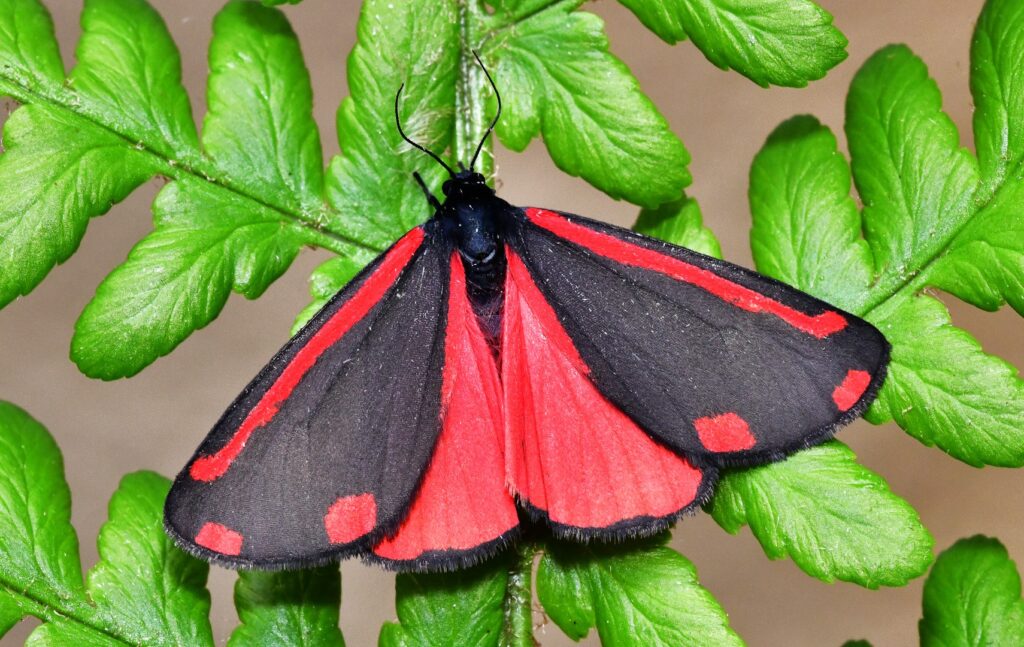
.

To allow the public easy access and avoid accusations that this is just the council saving money, paths are cut through the sward which allows people to walk their dogs without getting wet feet on damp mornings.
The East Lothian coast can have little more than 20 inches of rain per annum. That means that in some years we can cut but do not need to lift, as there has been so little growth. However a damp summer in 2016 led to an increase in coarse grasses and fewer flowers.
Yellow Rattle
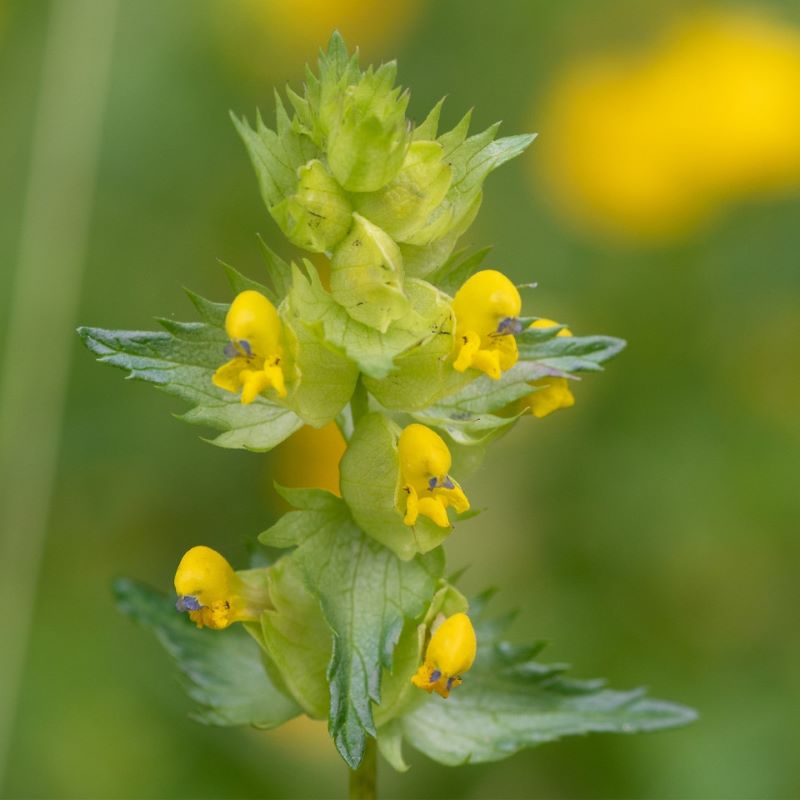
A few years ago, after the cut, NBIB and ranger led volunteer groups spent several mornings raking off the material. As an experiment we asked the mower operator to scalp parts of one section and we sowed yellow rattle into the bare patches. This has germinated successfully and was in flower by June. It is well known as a hemi- parasite on grasses so it will be interesting to see if it reduces their vigour in the trial area. The many hours spent laboriously raking has paid off with excellent flowering last spring and summer.
Bird life
The birds seen on and around Coos Green are typical of those to be found in gardens and fields throughout North Berwick. There are some less common visitors.
At certains times of the year Coos Green provides valuable feeding areas for many birds including the waders Curlews and Oystercatchers. Their long beaks are able to penetrate the sandy soil for worms and grubs.
The Curlew – Numenius arquata

The Curlew is the largest European wading bird, found on estuaries in winter and moors in summer. Look for its down-curved bill, brown upperparts, long legs and listen for its evocative, bubbling, call. In the winter, you’ll see Curlews feeding in groups on tidal mudflats, saltmarshes and nearby farmland.
In the spring and summer, Curlews migrate to their breeding grounds in upland areas of rough pasture, heather moorland and wetland. Curlews breed on a range of habitats, but like rough grasslands, moorlands and bogs best of all.
Oystercatcher: Haematopus Ostralegus

The Oystercatcher is a large, stocky, black and white wading bird. It has an orange-red bill and reddish-pink legs. In flight it shows a wide, white wing-stripe, a black tail and a white rump that extends as a ‘V’ between the wings. Because it eats cockles, the population is vulnerable if cockle beds are overfished. They breed on almost all UK coasts. During the last 50 years, more birds have started breeding inland. Most UK birds spend the winter on the coast where they are joined on the east coast by birds from Norway.
Mammals
Rabbits (Oryctolagus cuniculus)
Historically rabbits (Oryctolagus cuniculus) were common on Coos Green and a problem. In 1731, rabbits were destroying the green to such an extent that authority was granted to the burgesses to shoot and destroy them.
In the late 1950’s myxamatosis a highly contagious and often fatal virus for rabbits, was deliberately introduced to control the rabbit population. While the initial outbreak was devastating, it also led to the development of resistance in rabbit populations over time. Up until 2020 there were no rabbits to been seen on Coos Green. Since then numbers have sequentially risen and fallen. When numbers are high they cause a lot of damage digging to access roots. Surprisingly there are no predators to explain the population fluctuations, the assumption is therefore that Myxamatosis is still present in the population or the rabbits are being affected by a newer rabbit disease Rabbit Haemorrhagic Disease (RHD). As of 2025 a new variant Rabbit Viral Haemorrhagic Disease 2 (RVHD2) is spreading in the U.K.

Hedgehog: Erinaceus europaeus

Hedgehogs are occasionally seen on Coos Green, usually after dusk, foraging for food, mostly earthworms and grubs of various kinds.
Given that they have no predators on the green (aka badgers) their rarity is surprising.
Hedgehogs are 20–25cm long and typically weigh up to 1.2kg. They have a distinctive waddling gait and are covered in characteristic brown spines. They have long snouts and no spines on their underbellies, faces or limbs.