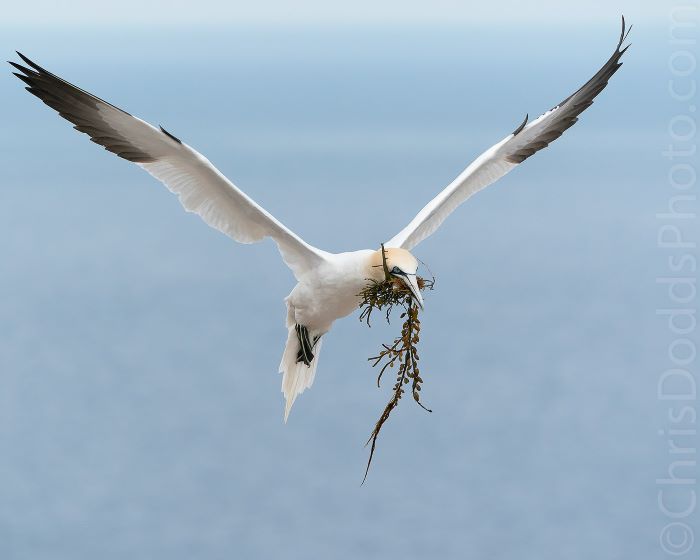
The Northern Gannet: Morus Bassanus
Gannets are usually visible in the air and often to be seen plunge diving for fish. Early in the season they will be seen carrying seaweed in their bills for nest building. Fish are swallowed whole under water and are rarely seen.

Eider Duck: Somateria Mollissima
The common Eider Duck (Somateria Mollissima) is the largest duck species in Britain, known for its size, weight, and fast flight. It’s a sea duck, meaning it’s primarily found along coastlines, especially in northern areas. Eiders are also known for their unique breeding habits and the importance of eider down in various cultures.
Eider Ducks can usually be seen off Milsey Bay. They do additionally come to shore to drink fresh water from the Glen Burn, In the breeding season the males are very striking and maybe heard calling as they throw their heads back, The last available female is often harassed by a group of competing males.

Eiders nest along the coast and visitors are asked to avoid marked areas in the nesting season.
Once hatched various clutches of ducklings are brought together into a nursery collectively supervised by several females to protect the young from marauding gulls usually Great Black-Backed.

Gulls
Gulls of various species are common along Milsey Bay. One you are unlikely to see is the Common Gull: Larus canus,which is in fact quite rare.
Identification can be quite challenging given the variation in individual species relating to age and breeding condition. Is it a Great Black-Backed gull a long way away or is it a close by Lesser Black-Backed?! The following guide might help.
Herring Gull: Larus argentatus
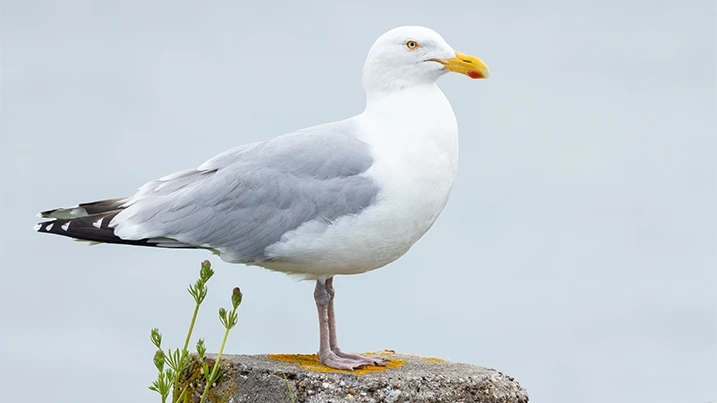
Herring Gulls are large, noisy gulls found throughout the year around our coasts and inland around rubbish tips, fields, large reservoirs and lakes, especially during winter. Adults have light grey backs, white under parts, and black wing tips with white ‘mirrors’. Their legs are pink with webbed feet and they have heavy, slightly curved bills marked with a red spot. Young birds are mottled brown. This species is on the Red List due to ongoing population declines and wintering population declines.
Great Black-Backed Gull: Larus marinus

A very large, thick-set black-backed gull, with a powerful beak. Adults are blacker than the smaller Lesser Black-backed Gull. It has a heavy flight and can look quite hunched when perched. It will fight off other gulls and chase them to snatch food.
They can be very agressive and are the main culprit resposible for stealing Eider ducklings.
Lesser Black-Backed Gull: Larus fuscus
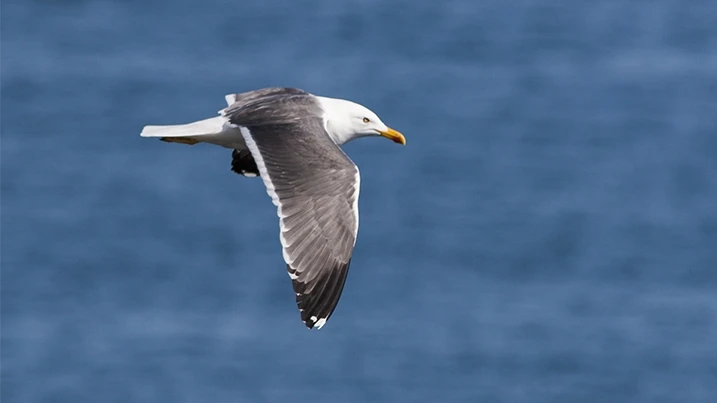
Similar markings to the great Black-Backed but much smaller and greyer rather than black.
Slightly smaller than a Herring Gull, the Lesser Black-backed Gull has a dark grey to black back and wings, yellow bill and yellow legs. Their world population is found entirely in Europe. After declines in the 19th century due to persecution, they increased their range and numbers. But this trend is beginning to reverse and there is serious concern about declines in many parts of its range. The UK is home to 40% of the European population most of which are found at a handful of sites. This means the species is now on the Amber List.
Black Headed Gull: Chroicocephalus ridibundus

Not really a black-headed bird, the Black-headed Gull’s head is more chocolate-brown. In fact, for much of the year, it has a white head. The black head is breeding plumage during spring and summer. It’s most commonly found almost anywhere inland. Black-headed Gulls are sociable, quarrelsome, noisy birds, usually seen in small groups or flocks, often gathering into larger parties where there is plenty of food, or when they are roosting.
Common Gull: Larus canus
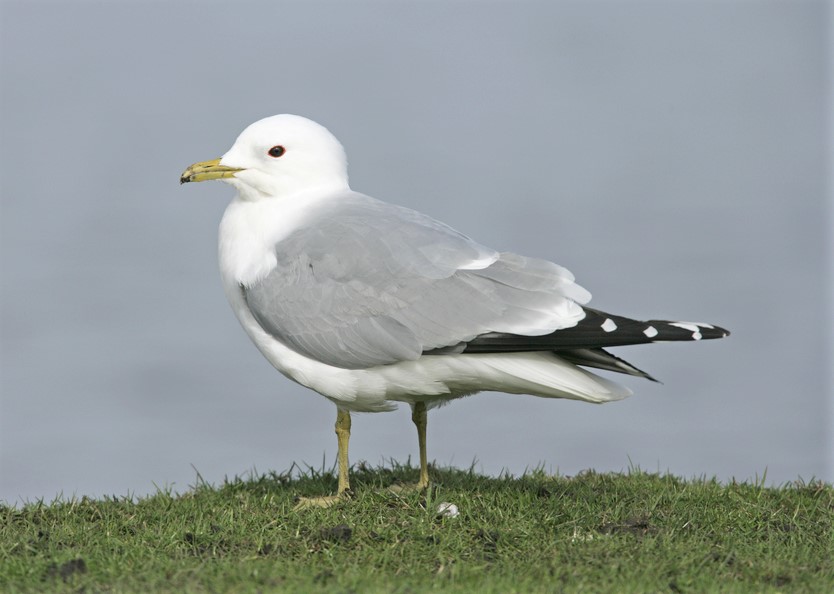
The Common Gull looks like a smaller version of the Herring Gull, with greenish legs and a yellow bill. Despite its name, it is not at all common but is seen along the East Lothian coast.
They have greenish-yellow legs, a thin, yellow bill, and a dark eye.
Kittiwake: Rissa tridactyla
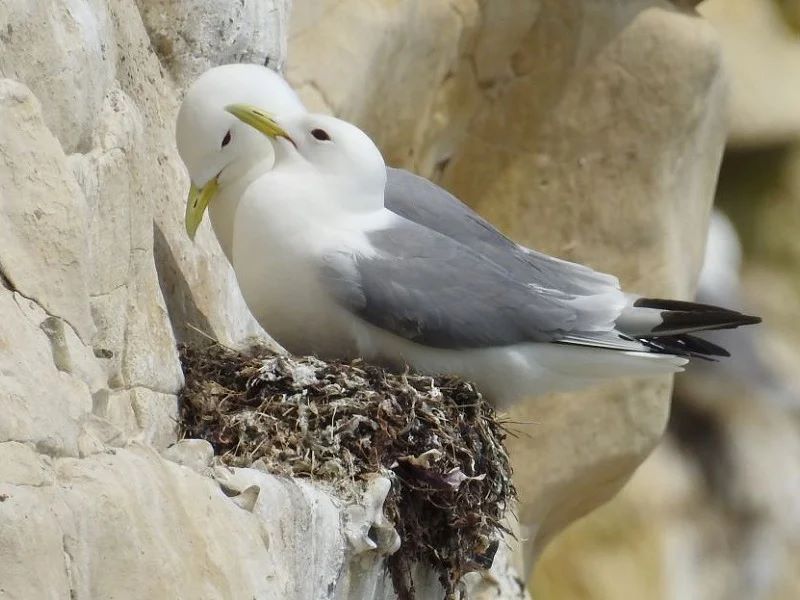
You are unlikely to see a Kittiwake at Milsey Bay. If you do it will be inflight over the sea. The best place see Kittiwakes is Dunbar harbour where they nest on the walls of the harbour and Dunbar Castle. If they are not on the nests they are out at sea fishing.
Kittiwakes are gentle-looking, medium-sized gulls with a small yellow bill and a dark eye. They have a grey back with white underneath. Their legs are long and black. In flight, the black wing-tips show no white, unlike other gulls, and look as if they have been ‘dipped in ink’. The population is declining in some areas, perhaps due to a shortage of Sandeels. After breeding, birds move out into the Atlantic where they spend the winter.
Fulmar: Fulmarus glacialis
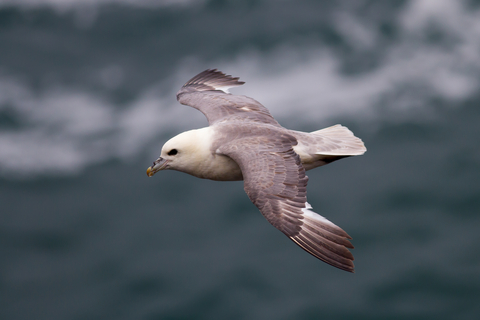
You are unlikely to see a Fulmar at Milsey Bay. If you do it will be in flight with short stiff wings. The best place to see Fulmars is on the cliffs at Seacliffe.
Although looking like a gull, this grey and white seabird is related to the albatrosses. The Fulmar flies low over the sea on stiff wings, with shallow wingbeats, gliding and turning to show its white underparts then grey upperparts. At its breeding sites, it will fly high up the cliff face, riding the updraughts. They will feed in flocks out at sea. They defend their nests from intruders by spitting out a foul-smelling oil.
Terns
Terns are seabirds in the family Laridae that have a worldwide distribution and are normally found near the sea, rivers, or wetlands. They are slender, lightly built birds with long, forked tails, narrow wings, long bills, and relatively short legs. Most species are pale grey above and white below with a contrasting black cap to the head. The sexes are identical in appearance, but young birds are readily distinguishable from adults. Terns have a non-breeding plumage, which usually involves a white forehead and much-reduced black cap.
Terns are very commonly seen on Milsey Bay. Typically they fly along the water’s edge and plunge dive on small fish. They almost hover. They are difficult to identify in flight and unfortunately rarely seen on the ground. This guide might help.
Common Tern: Sterna hirundo
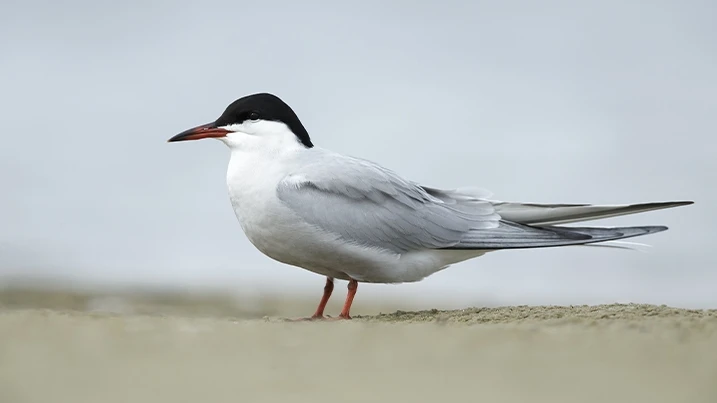
These delightful silvery-grey and white birds have long tails which have earned them the nickname ‘sea-swallow’. They have a graceful, floating flight and frequently hover over water before plunging down for fish.
If you get close enough you might see the characterstic red bill with a black tip.
They often gather and breed in noisy groups.
Arctic Tern: Sterna paradisaea
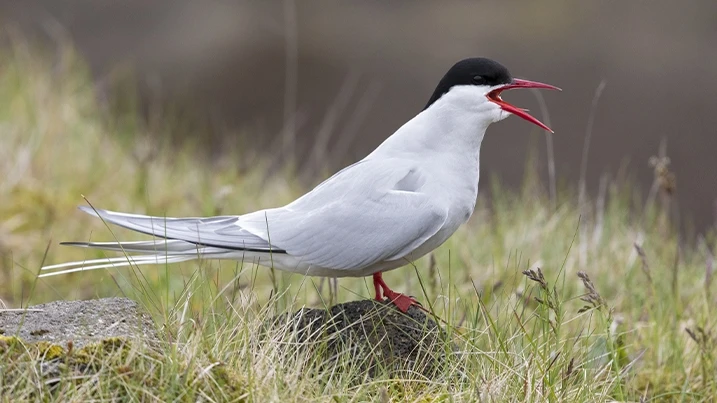
With its long tail streamers and streamlined shape, the Arctic Tern deserves its local name of ‘sea swallow’. White with a black cap, it’s a largely coastal bird, although it can be seen inland during migration. Arctic Terns depend on healthy marine environments, and some groups have been affected by fish shortages. Arctic Terns are the ultimate distance migrants, flying between the UK and the Antarctic every year.
Sandwich Tern:Thalasseus sandvicensis

The Sandwich Tern is mostly white, with a black cap on its head, a black bill with a yellow tip and short black legs. In flight, it shows grey wedges on its wing tips and it has a forked tail. In the UK, many of the important groups survive because they’re on nature reserves.
Cormorant: Phalacrocorax carbo
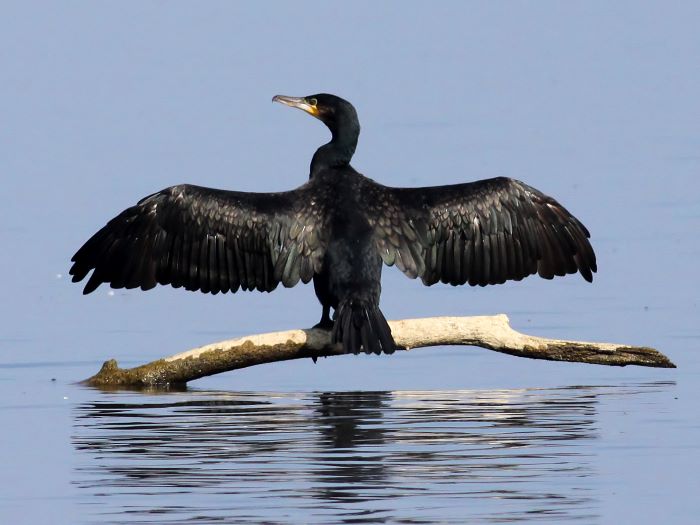
The Cormorant is a large, black waterbird whose size and colour make it very visible. With a reptilian neck, it has an almost prehistoric appearance. It is often seen standing with its wings held out to dry.
In terms of identification, cormorant have brown black feathers and in breeding plumage they are easy to identify with white patches on their thighs and under their chin. At close quarters their eyes are a striking green colour.
At Milsey Bay it is often seen off shore low in the water before diving for up to two minutes but typically 30 seconds or so.
Good sightings are common on boats trips around the Craig
Shag: Gulosus aristotelis
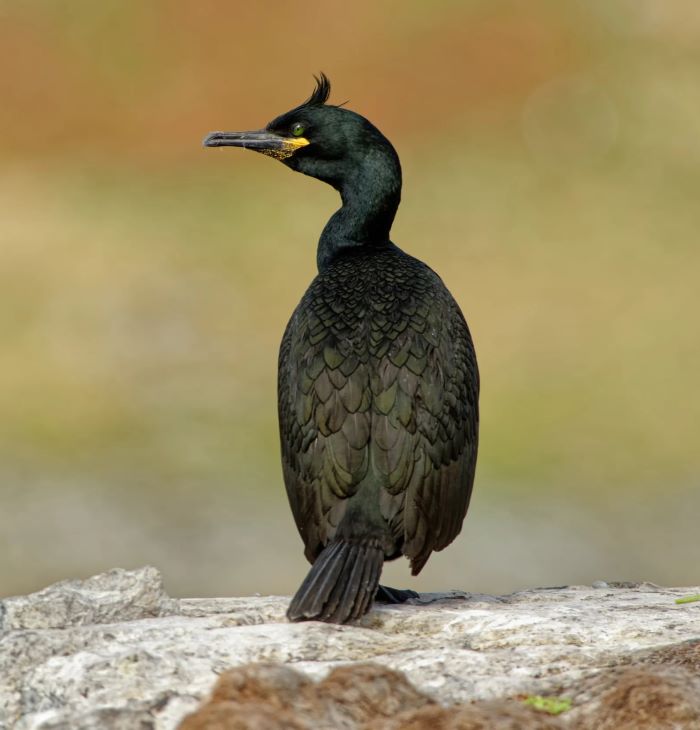
Shags are dark, goose-sized birds with long necks. They look similar to Cormorants but are smaller, slimmer and darker with a distinctive steep forehead. They do not have a white patch under the chin.
In the breeding season, adults develop a dark glossy green plumage and an obvious crest (head feathers) on the front of their head that curves forward.
Good sightings are common on boats trips around the Craig
Puffins, Razorbills and Gillimots
These birds may be seen offshore on the sea surface. They are much better observed from a boat trip around the Craig and the Bass.
Puffin: Fratercula arctica

The Puffins spends most of their lives out at sea fishing. They only visit land to breed. Good sites to see puffins are the Craig and the Isle of May. The puffins arrive in late March and are pretty much gone by the end of July.
The charactersitic multicoloured beak is in fact only coloured in the breeding season.
They nest in burrows on the islands. The parent birds take it in turns to go fishing. They often have run to the gauntlet of marauding gulls trying steal their catch. Nesting on the Craig has improved since the removal of rats, rabbits and the invasive Mallow plants which made digging burrows difficult.
The diet consists largely of Sand Eels so their prosperity is very closely linked with the well being of their main food source.
Guillimot:Uria aalge
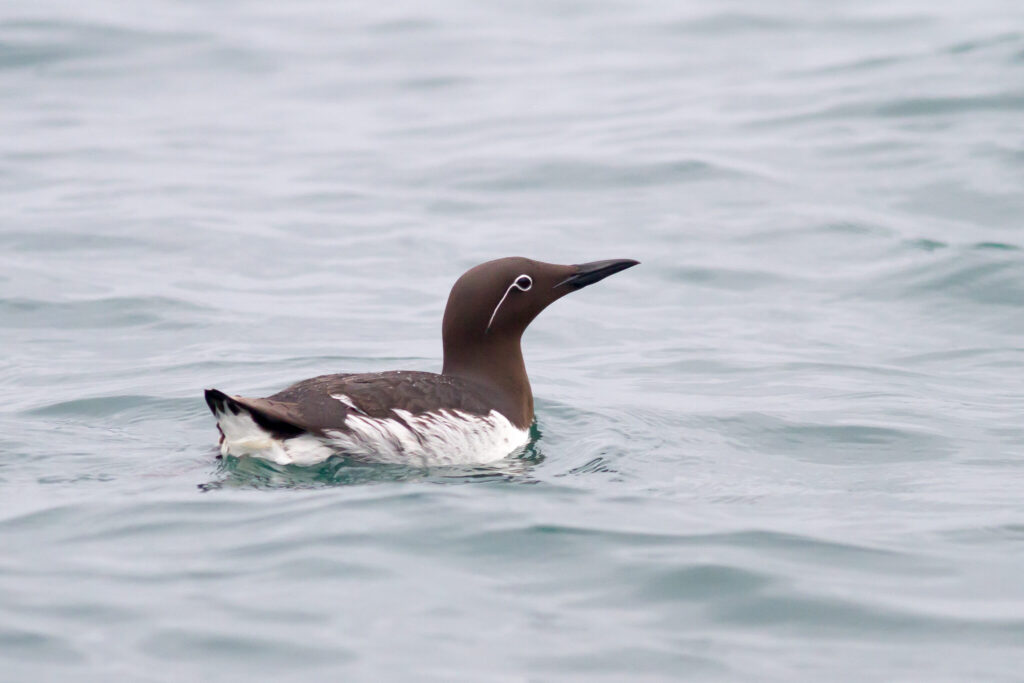
The Guillimot is a member of the auk family. They are known for their sleek, black and brown plumage, particularly in the breeding season, and are often found nesting on rocky cliffs. Eggs are incubated directly on rocky edges. Guillemots are also skilled divers, feeding on fish, crustaceans, and molluscs.
They may be seen on the sea surface off shore but are better viewed from a boat on a trip around the The Craig and The Bass especially the former.
They have been likened to small penguins. The have a very pointed which differentiates them from the Razorbill which is a similar size and colour.
Razorbill: Alca torda
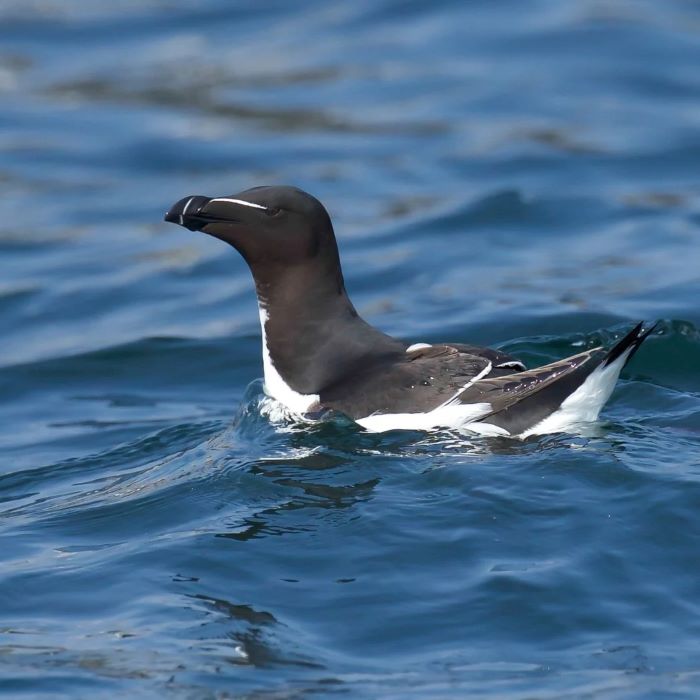
The Razorbill is an auk. It is the closest living relative of the extinct great auk.
Razorbills are primarily black with a white underside. The male and female are identical in plumage; however, males are generally larger than females. This agile bird, which is capable of both flight and diving, has a predominantly aquatic lifestyle and only comes to land in order to breed. The broad bill differentiates them from the Guillimot which has a very pointed bill.
It is monogamous, choosing one partner for life. Females lay one egg per year. Razorbills nest along coastal cliffs in enclosed or slightly exposed crevices.
Once again sometimes seen from shore on the sea surface but much better to observe them on the Craig from a boat.
Carrion Crow: Corvus corone

The Carrion Crow, although not really a seabird is very commonly seen on Milsey Bay patrolling the beach and sea edge looking for food. They are also common on Coos Green doing the same albeit for different food. They compete with gulls in both habitats.
It is completely black and makes a hoarse, cawing sound. Carrion crows make big nests out of twigs, rags, bones, and anything else they can find, which they hide in tall bushes; they do not nest in colonies like rooks, but are mostly solitary. Carrion crows are birds of farmland and grassland, but are extremely adaptable and will come to gardens and beaches for food, often seeming to be quite fearless. They feed on dead animals (as their name suggests), invertebrates and grain, as well as taking eggs and chicks from other birds’ nests.
Swallows and Martins
Not really seabirds but between April and October, Swallows and Martins will be seen swooping along the beach over strips of drying seaweed hunting for flies.
Swallow: Hirundo rustica

Swallows are small birds with dark, glossy-blue backs, red throats, pale underparts and long tail streamers. As they swoop upwards their long tail feathers are visible and the rump is black not white unlike the House Martin.They are extremely agile in flight and spend most of their time in the air. They are widespread breeding birds in the Northern Hemisphere, migrating south in winter. Swallow numbers in the UK have fluctuated over the last 30 years with strong regional variation in trends
House Martin:Delichon urbicum
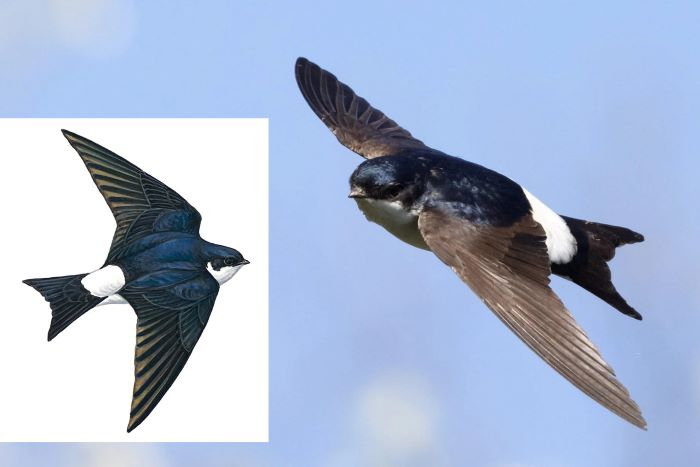
The House Martin is a small bird with glossy blue-black upper parts and pure white under parts. It has a distinctive white rump with a forked tail and, on close inspection, white feathers covering its legs and toes. It spends much of its time in flight, collecting insect prey. The bird’s mud nest is usually located below the eaves of buildings. They are summer migrants and spend their winters in Africa.
Sand Martin: Riparia riparia
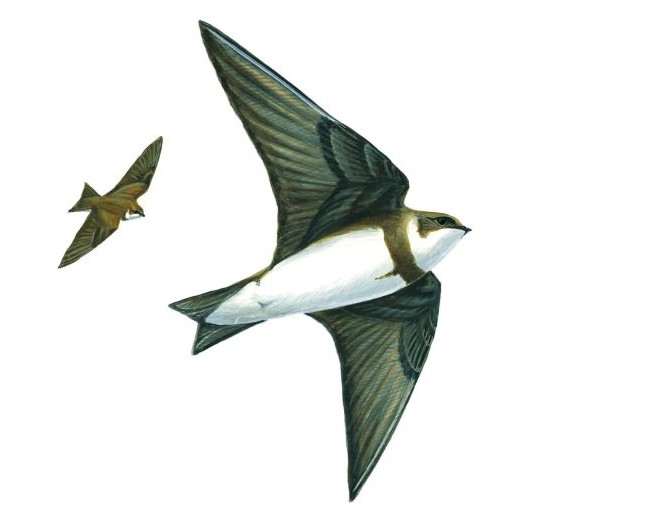
Sand Martins are unlikely to be seen on Milsey Bay.They nest in burrows dug into firm sandy banks of cliffs. There is a colony at Yellowcraig beach at the North Berwick end.
They have a dark collar to show that they are not House Martins.